

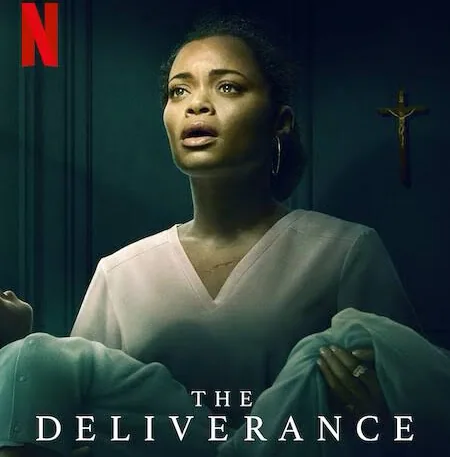
These themes touch on issues many of us can relate to, whether from personal experiences, reading, or conversations we’ve had with other people.
The prominent themes include various forms of abuse (physical, mental, emotional, and psychological); a loveless home; a strained relationship between mother and daughter; the dynamics between a mother and her children; living in a slum; demonic possessions; a faithless life; a broken marriage; and the importance of a spiritual life. There may be other themes you can identify while watching.
It’s essential to note that the movie is based on a true story, although I believe some fictional twists were added for dramatic effect.
The main character, a mother, is portrayed as violent and abusive, with a horrible relationship with her children. She exhibits a ‘switch-up’ personality—on rare occasions she’s sweet, but most times, she's erratic. This complexity makes her a difficult and challenging character to empathize with, yet it also piques curiosity about the genesis of her behavior.
One incident that struck me was a family dinner scene where a minor argument with her own mother escalated. When her youngest son made a comment, she hit him very hard in the face, causing him to bleed profusely.
This scene was deeply disturbing and upsetting, and I found myself speaking to the screen, grappling with my emotions. My frustration with her character grew, yet I had to remind myself it was ‘just a movie’ and continued watching. Her condescending and toxic behavior toward her mother and children was evident, and I was torn between anger and pity.
As the plot unfolds, we see more dimensions of this woman’s life. She is depicted as a struggling single mother with no external support (the details of her divorce remain vague), embodying bitterness and anger that were grossly depicted through her interactions with her children and mother.
However, as the story progresses, we gradually begin to understand her conflict with her mother.
While I am empathetic by nature, I strive not to lose sight of the bigger picture. Understanding her past offers insight into her behavior, but it raises critical questions: Is it justifiable to treat others poorly based on one’s own suffering? Her traumatic childhood experiences are clear, and while I sympathized with her, it didn’t excuse her treatment of her family.
Sympathy should not blind us to the need for accountability. People in her position need to be confronted about their harmful actions and guided toward help.
The film resonated with me on a personal level, making it particularly triggering. I have never been a fan of physical confrontation.
Dialogue, although often dismissed, is crucial for conflict resolution. Violence begets violence, and abusive parents often use it to exert control over their children. Isn’t it amazing how some abusers cease their harmful behavior when confronted?
I have seen this play out in real life.
One scene that demonstrates this is when her oldest son confronts her about the money he put somewhere that she took. She defensively belittles him, leading to a physical altercation where he pushes her against a kitchen counter, causing her to fall.
I must confess that it felt exhilarating to watch that moment, as it showcased her surprise and realization of the consequences of her actions. This illustrates my earlier point: When you push people to their limits, you cannot expect them not to react.
It was heartbreaking to see how desperately the children wanted to flee from their mother. While I found this sad, I cannot say that it wasn’t expected. It’s typically a natural reaction to violence.
Those who remain in abusive situations often face emotional manipulation and blackmail, believing they are unworthy of love or support outside the abusive environment. Some may feel they cannot seek help, while others stay due to the benefits or fear of stigma associated with leaving.
My feelings toward this woman were conflicted: I acknowledged how much of a victim she was in the story, but quite frankly, it didn’t deter the fact that she became the perpetrator, a monstrous ‘inflicter’ of pain, and the bad guy, such that it overshadowed the degree of sympathy you’d typically be inclined to show. In short, she didn’t help her case at all, and I didn’t feel bad about that either.
Throughout the film, I found myself hoping for social services to intervene and rescue the children, as their mother was clearly unfit to care for them. I also wanted her to receive help, but individuals at her level of dysfunction often believe they do not need it. She appeared to be an irredeemable soul.
Her life was undeniably tragic, and there are valuable lessons to be learned from her story. I chose to focus on the theme of abuse, as it is frequently overlooked, downplayed, or glamorized.
I also intended to connect this discussion to the story of “The Menendez Brothers” someday.
But until then, it’s your girl, Rey Ecstasia…


Comments
No comments yet.
Be the first to say what stayed with you. Anonymous is fine.